BrickWorlds — Simulation Demo
BrickWorlds is a continuously evolving project for developing and testing core game mechanics. Regular updates expand, refine, and test the systems that make everyday life in this world possible.
Build a home, find useful work, meet your neighbors, or spend a quiet day exploring an island. BrickWorlds is growing toward a simulation of everyday life, society, and a shared economy, where real players and future autonomous AI residents can shape the world through their own choices.
Life on the island today
The current playable demo is 0.4.22-responsive-input, Map5. Your home, belongings, resources, accepted work, and relationships with NPCs are saved on the game server.
Meet Milo, Ruby, and Nova, who follow authored conversations, routes, schedules, and limited tasks. Supply wood to Milo's workshop, make paid plank batches from delivered stock, and carry a documented shipment to Ruby. These small workshop scenarios have finite demand, funds, and deadlines. Completed work can improve your private relationship with the relevant NPC and open a short conversation story.
Talk to nearby players through local chat, quick phrases, and gestures. Send a contact request to exchange personal messages with an accepted contact while you are both connected in the same world. Offer help with a stage of a neighbor's already paid room, request help for your own project, or confirm a separate gift of your own bricks. Property access and work permissions remain scoped to the task.
Mute and block controls are available; chat is temporary. A confirmed complaint receives a private reference number and service explanation. A private operation history lets you review your actions, while the demo retains normal resource costs and player permissions.
A place of your own
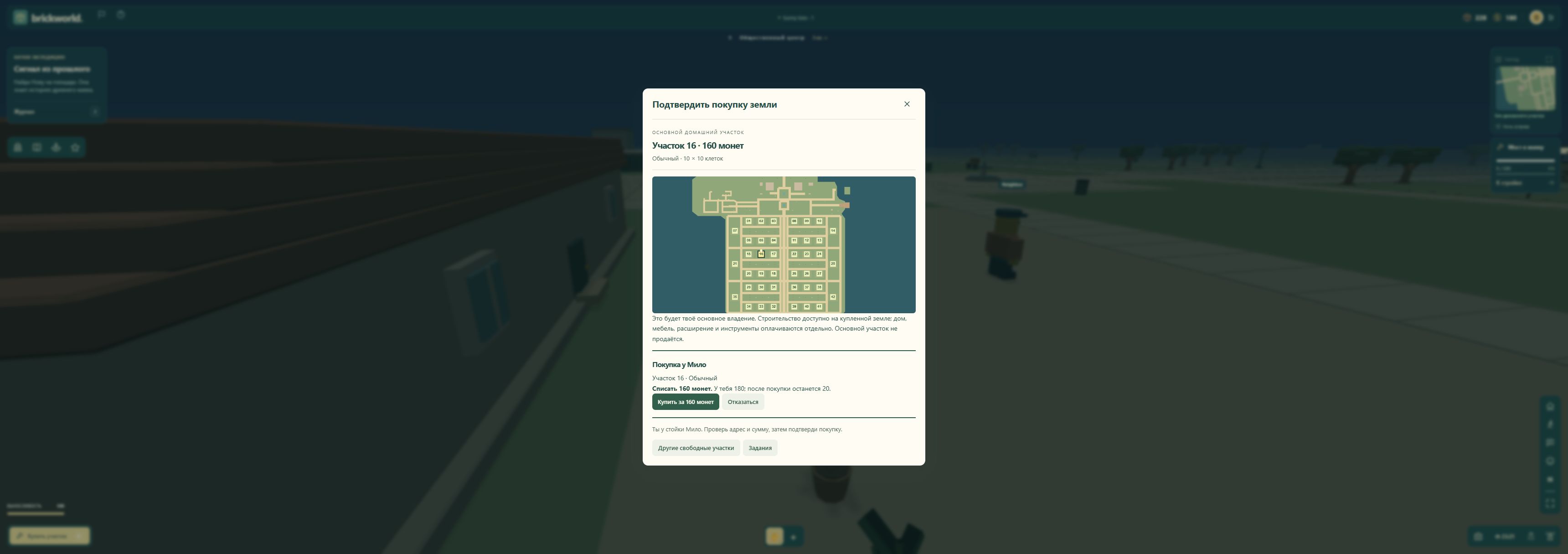
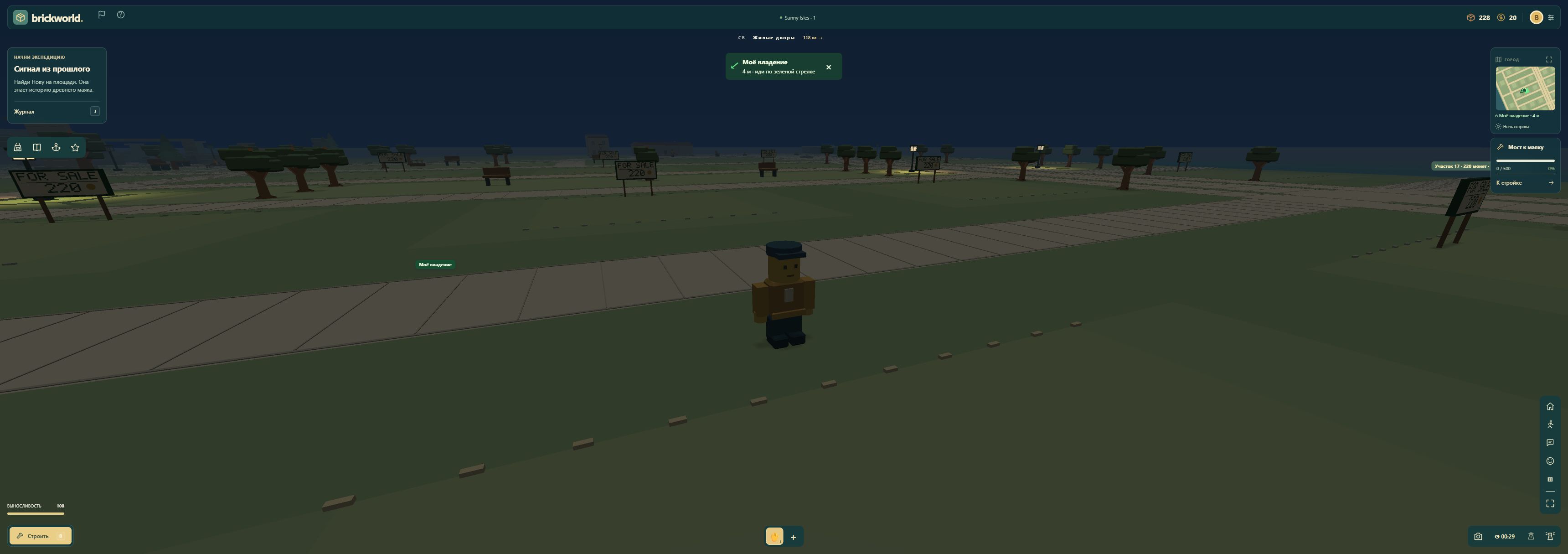
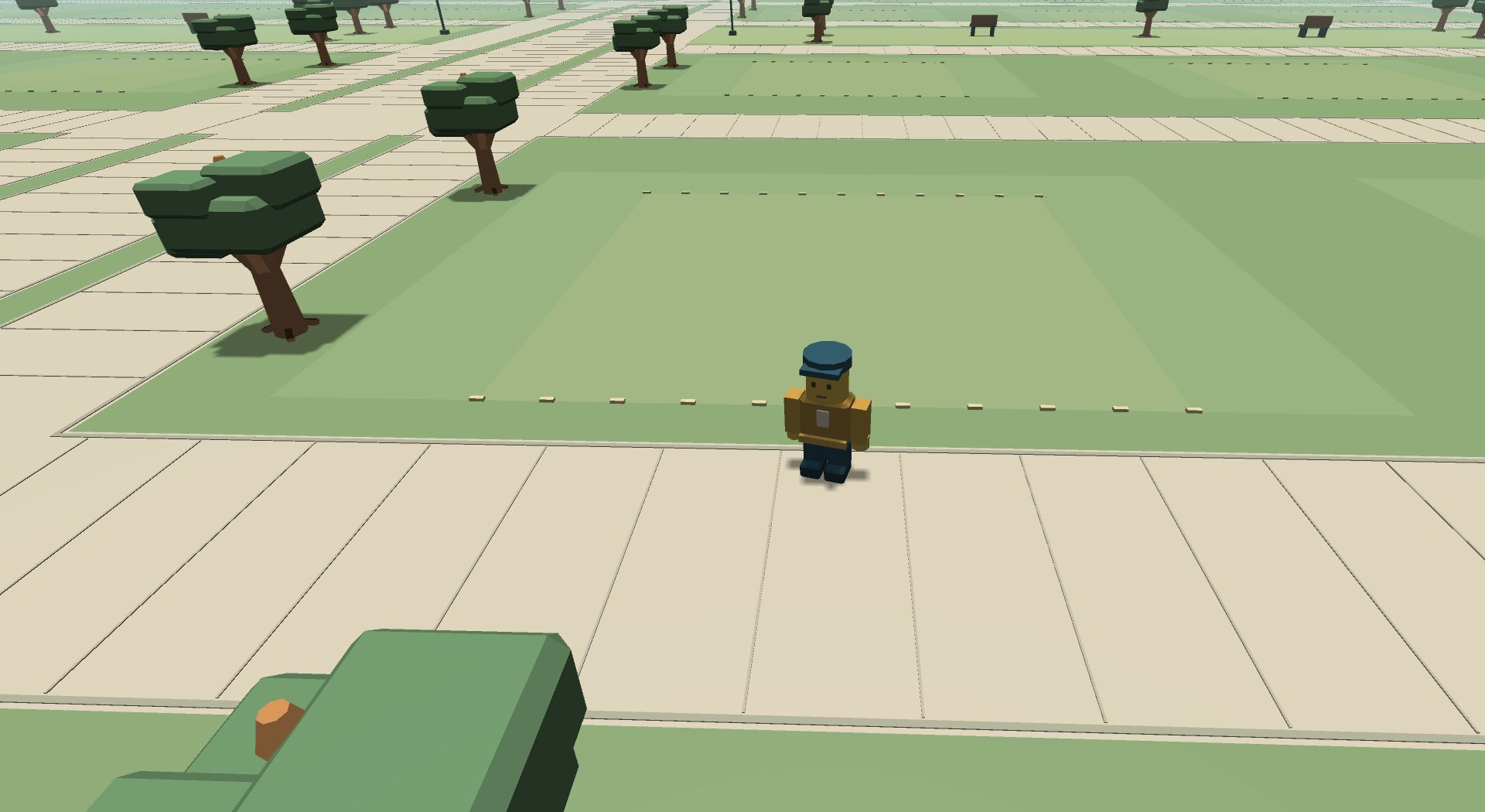
The town has 42 permanent residential plots across six courtyards. New players arrive near Milo without a plot. Complete the introductory conversation and nearby public-chest tasks, inspect a FOR SALE sign, and confirm the selected address and price at Milo's workshop stand. Available plots cost 160–340 coins, depending on their location. Your map highlights your property, and the green minimap arrow points toward your main home.
Build modular rooms in stages, choose walls, windows, and doors, and arrange your belongings using 79 building and furnishing asset types. Move small items, use containers and home storage, save personal blueprints, and manage the available additional properties. Some catalog objects are decorative; functional objects display their available actions.
Explore, gather, and try things
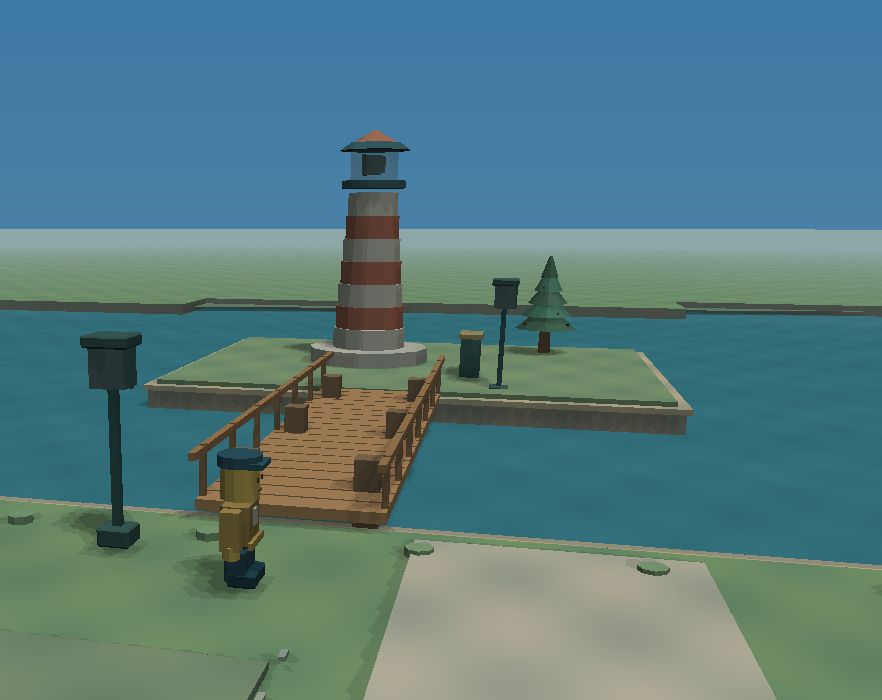
Explore the town, public spaces, port, forests, quarry, cave, ruins, and lighthouse areas. Gather materials with tools, fish, hunt wildlife with a bow, and follow the expedition story involving the bridge and coastal beacons. Try the available boat routes and a simplified quarry excavator.
Map5 includes 1,599 shared natural trees in the tree-gathering pilot. An axe action takes 1.5 seconds and can yield up to three wood. Depleted trees become stumps and can regrow after 15 minutes of real time when their location is clear. Personal, protected, and decorative trees are excluded. Cargo shipping currently uses timed transfers and limited workshop delivery orders.
The next direction: autonomous AI residents
This is the direction of development; the current NPCs use the authored systems described above. We want future residents to have individual personalities, habits, needs, memories, relationships, and long-term goals. Hunger, fatigue, mood, rest, and social contact could influence how they spend their day.
A resident could choose work, change plans when circumstances change, remember an encounter, start a business, or prefer a quieter life. One might become a carrier, another supply building materials, and another open a workshop. Their decisions and interactions with players and other residents are intended to create everyday stories within the shared world.
A society and economy that grow with the world
Our long-term vision includes player-run businesses, workshops, traders, transport services, and opportunities to hire players or AI workers. Contracts, wages, supply relationships, permissions, and simple public rules would support those activities. Residents should be able to pursue their own interests and decide how much to contribute to community projects.
Building the future together
Planned construction expands toward editable home blueprints built from foundations, structural blocks, wall sections, floors, and roofs. Larger public projects would use more detailed assembly, with materials, deliveries, labor, machinery, and successive construction stages.
One planned example is a 100×100-cell temple: a long-term community project involving players, future AI residents, building teams, and transport businesses. We also want large completed structures to use efficient rendering while retaining their construction data. Damage, repair, restoration, compensation, and carefully controlled destruction events are further ideas under discussion.
Play and follow development
Click Open game in the launcher, or play on the game site. The world opens in a separate tab, where sign-in and saved progress are handled. You need an internet connection and a desktop browser with WebGL2. The game interface is currently in Russian. Mobile and device performance testing continues. Read the project overview.
AI-assisted development
BrickWorlds is being created with AI under human direction. Most of its code, scenes, and creative ideas are written, designed, and developed by AI. This describes how the project is made; autonomous AI residents are a separate planned gameplay direction.